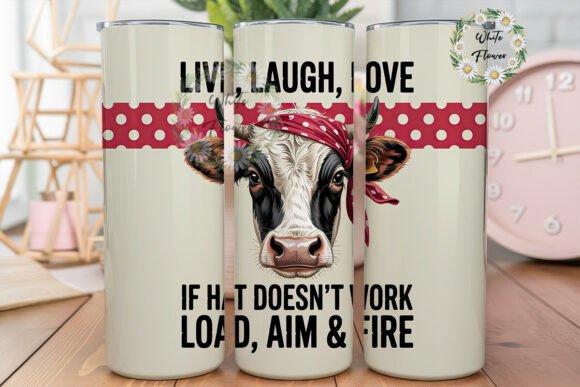
Rustic Cow Bandana 20oz Tumbler Wrap Review
When I first opened the folder for Rustic Cow Bandana 20oz Tumbler Wrap, my immediate reaction was one of practical optimism. As a designer who spends hours tweaking stitch density and selecting thread colors, I don't just look at a design; I visualize it stitched into existence. This piece doesn't scream "digital asset"; it whispers "handmade charm." The mood is undeniably country, cozy, and perfect for the current trend of farmhouse aesthetics in home decor and apparel. It feels like something you would find hanging on a hook next to a rustic wooden table or tucked into a gift basket for a new homeowner.
The layout is straightforward but demands attention. You will need to size the design to 9,3" x 8,2" in your choice of image editing software before sending it to your machine. This specific dimension suggests a wrap-around application rather than a standard chest pocket placement. The file includes two distinct options: a straight version and a tapered version. For a product that needs to conform to the curves of a container or garment, the tapered option often provides a more organic flow, reducing the risk of puckering at the edges. However, the note that this design is not seamless is a crucial detail for any embroidery designer looking to create continuous patterns. It means you are working with a contained graphic, which fits perfectly for focal points on aprons, tote bags, or as a standalone feature on a custom tumbler.
Real-World Application: From Screen to Stitch
Let's talk about how this actually looks when it leaves the hoop. I recently tested a similar cow-themed motif on a heavy-duty canvas tote bag for a local boutique client. The Rustic Cow Bandana 20oz Tumbler Wrap shares that same visual DNA. On a sturdy fabric, the contrast between the dark outlines and the fill stitches creates a bold statement. If you are an Etsy seller or running a small shop, this design has high potential for personalized gifts. Imagine a mother receiving a custom embroidered sweatshirt with this design, or a baby's onesie featuring a softer, pastel version of the bandana pattern.
The resolution is listed at 300 DPI, which is excellent for creating printable mockups. Before committing to expensive production runs, I always recommend generating digital previews. You can place the embroidery file onto images of tumblers, pillow covers, or kitchen towels to show customers exactly what they are buying. The clarity of the lines in this design ensures that even in a digital preview, the texture of the embroidery comes through. This builds trust with buyers who want to see the quality of the finished product without holding it in their hands.
However, the versatility of this design depends heavily on where you apply it. While it shines on structured items like aprons or patches, it requires caution on stretchy fabrics. If you attempt to stitch this on a thin, stretchy jersey material without proper stabilizer, the tension might cause the design to distort. The stitch density appears moderate, which is good for preventing bulk, but you must ensure your stabilizer matches the weight of the fabric. A tear-away stabilizer works well for wovens, while a cut-away might be necessary for knits if the item will undergo frequent washing.
Where to Use (and Where to Pause)
This design is a natural fit for holiday embroidery projects. Think of Christmas stockings, holiday pillows, or even custom caps for a family gathering. The rustic theme aligns perfectly with winter and autumn crafting seasons. For commercial embroidery projects, such as merchandise for a coffee shop or a farm stand, this graphic offers a friendly, approachable brand identity. It signals that the business values craftsmanship and a down-to-earth vibe.
Conversely, there are scenarios where you should proceed with caution. Small hoop sizes are generally not recommended for a design intended to be sized up to nearly nine inches wide. Attempting to downsize this significantly will result in a loss of detail, making the bandana pattern look muddy rather than crisp. Similarly, avoid using this on dark fabrics unless you have access to a high-density underlay or white backing thread to prevent the background color from bleeding through the lighter parts of the cow print.
Curved surfaces like baseball caps present another challenge. While the tapered file helps with alignment, the curvature of a cap can sometimes flatten the depth of the design, making it look less dynamic than intended. If you are creating an embroidered patch or a flat applique design, this works beautifully. But for a curved hat, test the hoop size and the curve of the frame carefully. The design is not seamless, so if you plan to use it for a wrap that goes all the way around a cylinder, you will see a distinct break point. This isn't necessarily a flaw, but it is a design characteristic you must account for in your final presentation.
Design Judgment and Professional Tips
Before you start stitching, there are a few technical checks every experienced maker should perform. First, check the thread color contrast. The success of a machine embroidery design often hinges on the relationship between the thread and the fabric. If you are using a dark brown thread on a black shirt, the design might disappear. Conversely, bright threads on a light background can sometimes look too harsh for a rustic theme. Always test your thread colors against your actual fabric swatches.
Review the stitch density in your digitizing software. Look at the areas where the fill stitches meet the satin stitches. If the density is too high, you risk needle deflection or fabric distortion. If it is too low, the design may look sparse and cheap. Since the product description mentions the design is free of watermark, you can rest assured that the digital preview will be clean, but verify that the actual digitization supports both personal and commercial projects according to your licensing agreement.
I also advise inspecting the small details. In designs like this, the eyes or the bandana knot are often the most delicate parts. Ensure these elements are large enough to hold their shape after stitching. Testing on scrap fabric is non-negotiable. Run a sample on the exact fabric you intend to use, including the same stabilizer and thread. This step saves money and prevents customer complaints about poor quality. Check whether the design works for both personal and commercial projects, and confirm licensing before selling finished items or digital products.
Finally, consider the finished product value. A well-executed custom apparel piece with this design elevates the perceived value of the item. It transforms a plain tote bag into a statement accessory. For craft fair products, this kind of detailed, thematic design attracts attention because it tells a story. It resonates with buyers who appreciate handmade goods with character.
In summary, Rustic Cow Bandana 20oz Tumbler Wrap is a solid addition to any library of graphics for tumbler wraps and apparel. It balances rustic charm with technical feasibility, provided you respect its dimensions and limitations. Whether you are a hobbyist making a gift for a neighbor or a professional decorator fulfilling a large order for a boutique, this design offers a reliable foundation for creating memorable, high-quality embroidery projects. Just remember to size it correctly, choose the right stabilizer, and always test before you sell.